Falkland Islands - January 2026
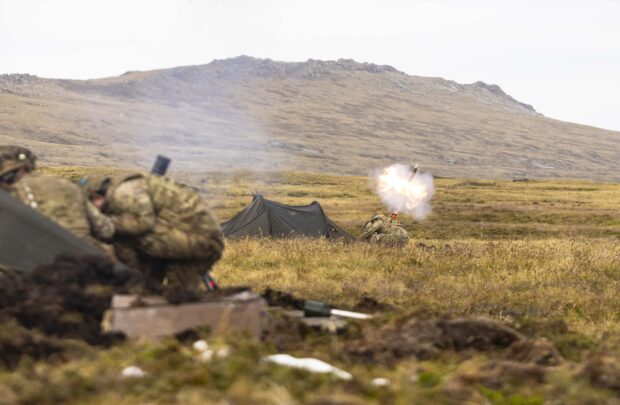
For B Company, 1st Battalion The Royal Irish Regiment, the Falkland Islands provided a demanding and memorable setting for their final exercise whilst based at the Falkland Islands. Isolated in the South Atlantic and separated from the UK by thousands of miles, the Islands are both strikingly beautiful and unforgiving, offering a training environment unlike anywhere else the British Army routinely operates.
The challenge begins long before arrival. Deploying personnel, equipment and sustainment to such a remote location requires detailed planning and coordination. Once on the ground, the environment quickly asserts itself as the dominant factor. The Falklands are defined by their exposure: open moorland, peat bogs, rocky high ground and rugged coastlines, all shaped by near‑constant wind and rain. Soldiers attempting to describe the Islands in just a few words were unanimous in their response - “cold, wet and windy.”
Moving across the terrain under load is physically demanding and slow. Small navigation errors can result in significant detours, and misjudging the ground can quickly lead to exhaustion or injury. Although many soldiers described the environment as entirely new to them, they recognised that prior training in the UK, particularly in Brecon, had provided essential preparation. Knowledge of layering systems, personal administration and pacing proved critical to maintaining effectiveness.
The largely treeless landscape offers little natural cover or concealment, forcing soldiers to rely on careful use of ground features, spacing and tactical movement to avoid detection. Understanding the terrain is challenging, with ground that appears solid often concealing bog or unstable footing. Among the most distinctive hazards are the stone runs - long stretches of angular boulders that are difficult and dangerous to cross, particularly while carrying weight.
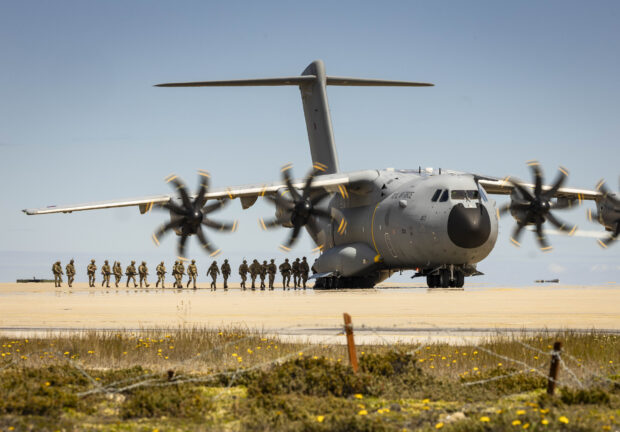
Beyond the physical environment, the Falklands sit at the extreme end of the military supply chain. Resupply cannot be conducted quickly, and medical evacuation timelines are significantly longer than those in the UK, reinforcing the need for thorough planning, strong first aid capability and self‑sufficiency at every level. The final exercise allowed the company to train beyond baseline requirements, including operating alongside more advanced capabilities, supported by extensive logistical preparation.
Patrols and exercises such as the final exercise serve a dual purpose: developing soldiers in one of the most demanding environments the Army operates in, while reassuring the local population and reinforcing UK sovereignty. Training in the Falklands is not theoretical - it is preparation grounded firmly in reality.
Leave a comment