From virtual seas to command rooms, the Wargaming Hub transforms ideas into actionable insights, ensuring NATO forces remain agile, resilient, and ready for the challenges of tomorrow.
The ability to anticipate, adapt, and innovate is more critical than ever. Wargaming has emerged as an ultimate proving ground for strategy, innovation, and collaboration. These high-stakes wargames are laboratories for collaboration, foresight, and decision-making under pressure, shaping the future of NATO, maritime defence and strengthening alliances across the Euro-Atlantic.
Gaming the future fleet: Royal Navy
In autumn, the Royal Navy’s senior leadership, including the First Sea Lord, General Sir Gwyn Jenkins RM, joined us at the Defence Experimentation and Wargaming Hub (DEWH) in Southwick Park, for a high-level wargaming exercise.
The exercise, part of the First Sea Lord’s “100 Day Sprint” initiative, was to assess the Navy’s strengths and vulnerabilities in 2029 against emerging threats. This structured, discussion-based simulation challenged participants to make decisions under escalating crises, revealing insights into the Navy’s capabilities and their interactions under pressure.
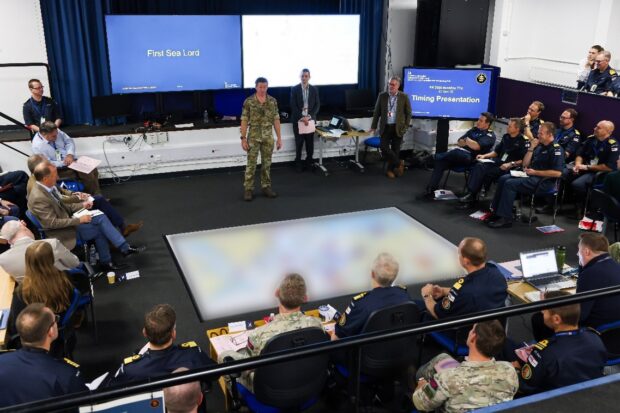
Unlike traditional audits or trials, it provided qualitative insights, generating hypotheses for further research and future wargames. It highlighted the need for foresight and flexibility in shaping the 2029 fleet, focusing on integrating autonomous systems, deploying new platforms, and strengthening NATO partnerships.
General Sir Gwyn Jenkins Royal Marines, First Sea Lord, said:
“Wargaming needs to be a habit, and we have come to the Defence Experimentation and Wargaming Hub to be tested. We must double down on our strengths and mitigate our weaknesses. The Royal Navy is part of the Integrated Force; we must understand our part to play to guarantee success”.
NATO explores the future of amphibious operations: the Defence Experimentation and Wargaming Hub
The Defence Experimentation and Wargaming Hub (DEWH) recently hosted a NATO-commissioned STRIKFORNATO Tabletop Exercisededicated to exploring the optimal employment of NATO Amphibious Forces in the deterrence and defence of the Euro-Atlantic Area. This event was a follow-on piece of work stemming from the DEWH’s first overseas wargaming event in Portugal from earlier in the year.
Bringing together key NATO commands and enablers along with national observers from the NATO Amphibious Leaders Expeditionary Symposium (NALES), the exercise focused on enhancing amphibious operations, interoperability, and command and control concepts to refine Regional Plans – military plans designed to defend every inch of Allied territory against potential threats.
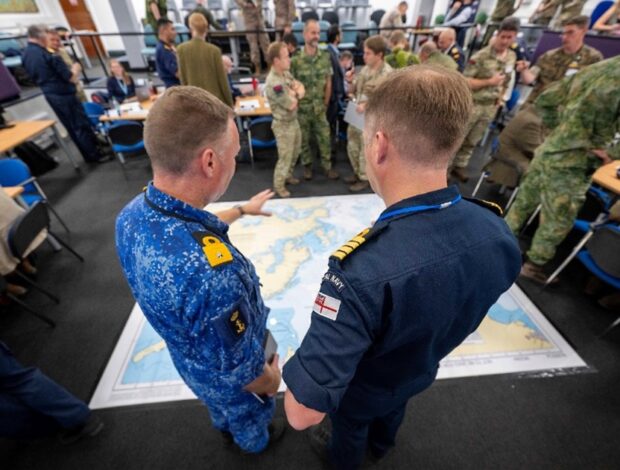
As a Royal Canadian Navy Commodore from the Allied Maritime Command (MARCOM) stated:
“The better we can understand each other, the greater our [Allied] capability”.
The event reaffirmed NATO’s commitment to maintaining robust amphibious capabilities as a cornerstone of collective defence. It also underscored the growing importance of experimentation and wargaming in driving innovation, adaptability, and informed decision-making – ensuring NATO remains agile and effective in meeting the challenges of an evolving security environment.
Wargaming: NATO’s future advantage
Most recently the Integrated Warfare Centre’s DEWH hosted, RED HYENA 45, a major NATO wargaming event led by Allied Command Transformation (ACT). RED HYENA 45 follows earlier Strategic Competition Games such as Red Dragon and Sentinel Vanguard 44, which test NATO’s ability to anticipate and shape emerging challenges.
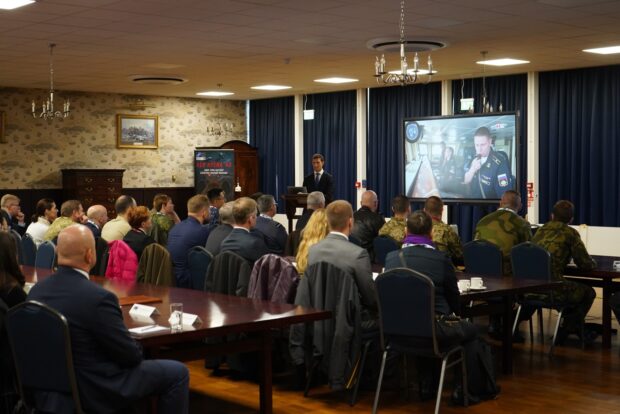
The exercise brought together strategists and analysts from across the Alliance to explore how NATO’s Long Term Military Strategic Shaping (LTMSS) initiative – an ambitious effort to move the Alliance from a reactive posture to a proactive one. The initiative is central to ACT’s vision of “Acting Today to Shape Tomorrow” and aims to help NATO influence the strategic environment rather than simply respond to it.
The DEWH operates, within the Integrated Warfare Centre under Cyber & Specialist Operations Command. The Hub provides NATO, and other Defence agencies, with a world-class venue for testing ideas, exploring threats, and refining military strategy.
As one of the four UK military commands, CSOC operates at the forefront of modern warfare, delivering critical effects to national security and NATO, combining conventional and digital capabilities to deter threats and maintain warfighting readiness. CSOC also contributes to a broader, whole-of-society approach to national resilience by strengthening partnerships across government, industry and society.
Leave a comment